Gotchies · The Education Hub
100% Organic Cotton Boxers 2.0 Zero Polyester Free U.S. shipping over $100 · 100-day returns
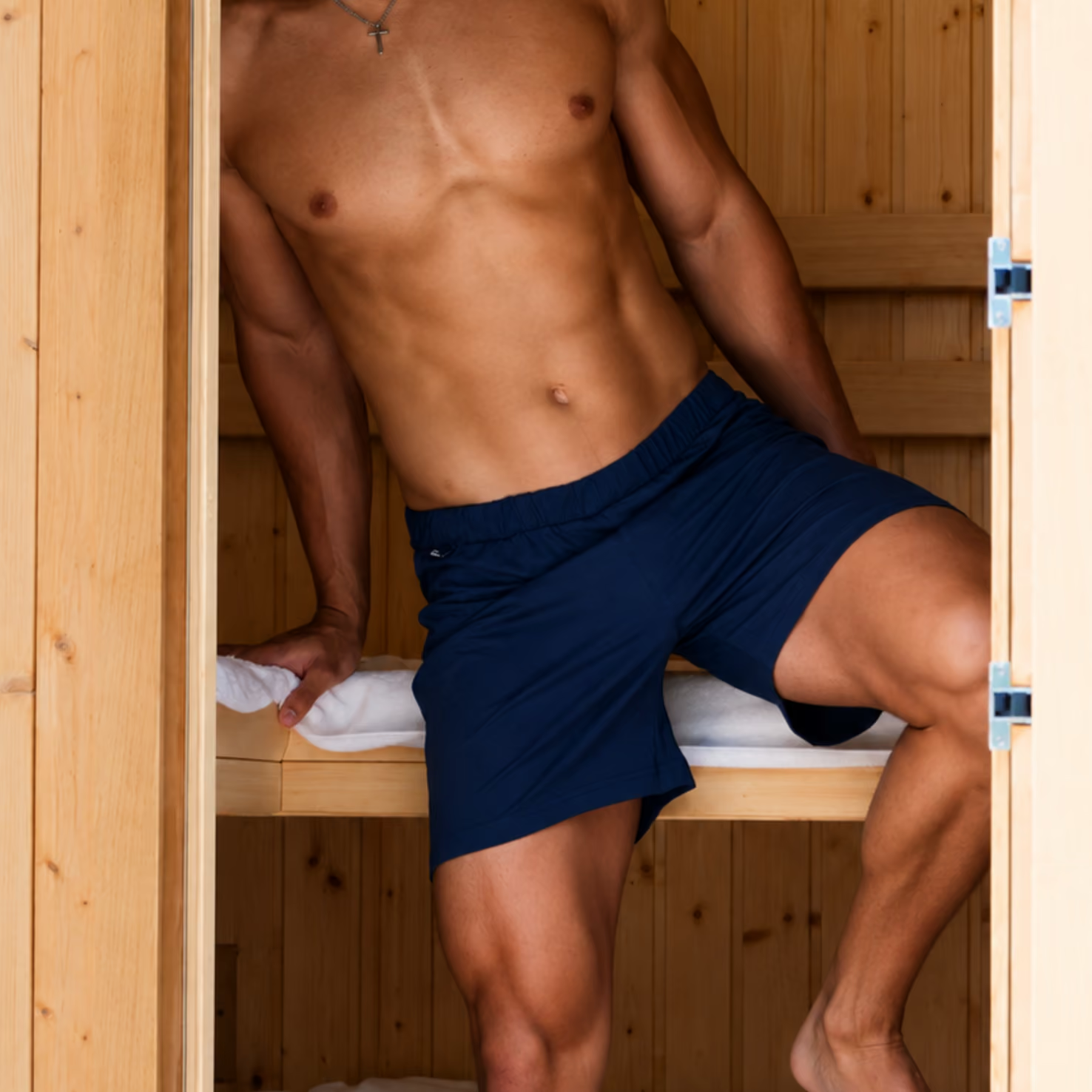
Organic Cotton Boxers 2.0
100% GOTS organic cotton · zero polyester · zero elastane · 100-day returns
$25.60
$32
per pair, 8-pack
Peer-Reviewed · Archives of Andrology, 1996 · Reading Time: 6 Minutes
Four Fabrics. Fifty Men. Twelve Months. Only Two Groups Had A Problem — And Both Of Them Were Wearing Polyester.
In 1996, a Cairo University surgeon put fifty healthy, sexually active men into four different pairs of underwear and tracked what happened for a year. Cotton and wool: no change. Polyester and the poly-cotton blend: a significant decline, worse at twelve months than at six, and worse in the pure polyester group than the blend. Then he took the underwear away — and everything went back to normal. Here's the study, what it actually proves, and what it doesn't.

Kiavash Seraj
Co-Founder, Gotchies — Chief Sack Operator
The Healthy Underwear Company
The Study On The Table
“Effect of different types of textiles on male sexual activity.”
Shafik A. — Department of Surgery and Experimental Research, Faculty of Medicine, Cairo University, Egypt.
50 men · 5 groups · 12 months of wear · 6-month follow-up after removal.
Arch Androl. 1996 Sep-Oct;37(2):111–5. doi:10.3109/01485019608988511. PMID: 8886260.
At A Glance — What The Four Groups Wore, And What Happened
| 100% Polyester | 50/50 Poly-Cotton | 100% Cotton | 100% Wool |
|---|
| Sexual activity held steady over 12 months | ✕ | ✕ | ✓ | ✓ |
| No electrostatic potential generated | ✕ | ✕ | ✓ | ✓ |
| Result got worse the longer it was worn | ✕ | ✕ | ✓ | ✓ |
| Petroleum-derived plastic against your skin | ✕ | ✕ | ✓ | ✓ |
| What Gotchies makes | ✕ | ✕ | ✓ | ✕ |
Fifty Potent, Sexually Active Men. Five Groups. One Variable: The Fabric.
Dr. Ahmed Shafik ran the kind of experiment nobody runs anymore. He recruited fifty men — all potent, all sexually active at baseline — and split them into five equal groups. Four groups were given underpants made from a single textile each. The fifth was the control. Then everyone went about their lives for a year.
100% Polyester
Significant decline
The worst result of the four. Decline was measurable at 6 months and larger at 12.
50/50 Poly-Cotton
Significant decline
Blending cotton in helped — but didn't fix it. Half-plastic is still plastic.
100% Cotton
No change
Statistically insignificant change across the entire 12-month period.
100% Wool
No change
Same story as cotton. The natural fibres simply didn't do anything.
Sexual behaviour was assessed at baseline, at 6 months, at 12 months, and again 6 months after the underwear was removed. The measure was the ratio of potent intromissions to mounts — the I/M ratio — with a response counted as potent only if the man achieved erection, intromission and ejaculation. Alongside that, Shafik measured the electrostatic potentials generated on the penis and scrotum using an electrostatic kilovoltmeter.
Both Polyester Groups Dropped Significantly. Both Natural-Fibre Groups Didn't Move.
At both the 6-month and 12-month checks, the I/M ratio in the polyester and poly-cotton groups was significantly reduced compared with their own pre-test baseline and with the controls, at p < .001. Two patterns fell out of the data, and both of them point the same direction: the more polyester, the worse the result — and the longer it was worn, the worse the result.
p < .001
Significance of the decline in both polyester-containing groups
12 > 6
The decline was more pronounced at 12 months than at 6
100% > 50%
Pure polyester was worse than the poly-cotton blend
That dose-response relationship is the part worth sitting with. If the effect were noise, you wouldn't expect more polyester and more time to both make it worse in the same consistent direction. The cotton and wool groups, meanwhile, showed insignificant changes for the entire study period — they were simply unaffected.
The Polyester Pants Generated An Electrostatic Field. The Cotton And Wool Generated None.

This is where the study gets interesting. Shafik didn't just record the outcome — he measured a physical difference between the fabrics. The polyester-containing pants generated electrostatic potentials on the penis and scrotum. The cotton and wool textiles generated none at all. Not less. None.
His proposed explanation was that those potentials could induce electrostatic fields in the intrapenile structures, and that this could account for the diminished sexual activity. In his companion work he measured roughly 338.9 V/cm² across the scrotal area on 100% polyester, against a zero reading on 100% cotton.
Be clear about what that is: a plausible mechanism the author proposed to explain his own findings, not a proven causal pathway. Shafik measured the field and observed the decline; he did not demonstrate that one produced the other. We'd rather tell you that than oversell it.
Six Months After They Took The Polyester Off, Everything Went Back To Baseline.
This is the single most useful sentence in the whole paper, and it's the reason we built a company instead of just writing a scary blog post. Six months after removal of the underpants, the I/M ratio had returned to pre-test levels in both of the groups that had worn polyester-containing pants.
100%
Return to pre-test levels in both polyester groups after removal
6 months
Time to recovery once the fabric was gone
$0
Cost of the intervention. You just stop wearing the plastic.
Whatever the polyester was doing, it wasn't permanent. The variable was the fabric, and the fabric is the one thing in this entire conversation you can change this week without a prescription, a supplement, or a single lifestyle sacrifice.
What This Study Doesn't Prove. We'd Rather You Hear It From Us.
Fifty men across five groups means ten men per arm. That is a small study. It comes from a single research group — Shafik published a related body of work on textiles and reproductive function through the 1990s — and it has not been widely replicated since. The I/M ratio is an unusual outcome measure for human research, and any self-reported sexual-behaviour data carries the obvious risks.
So no, one 1996 paper with ten men per group does not settle the question of what polyester does to the human body. Nobody should tell you it does, and we won't. What it does do is put a specific, measurable, peer-reviewed finding on the table that the underwear industry has had thirty years to respond to and hasn't.
Here's the asymmetry that actually matters. If the research is wrong, you wore really comfortable certified organic cotton for no reason. If it's right, you avoided the whole thing for the price of switching what's in your drawer. You don't need certainty to make that trade — you just need to stop wearing the plastic.
The Cotton Column, In A Drawer
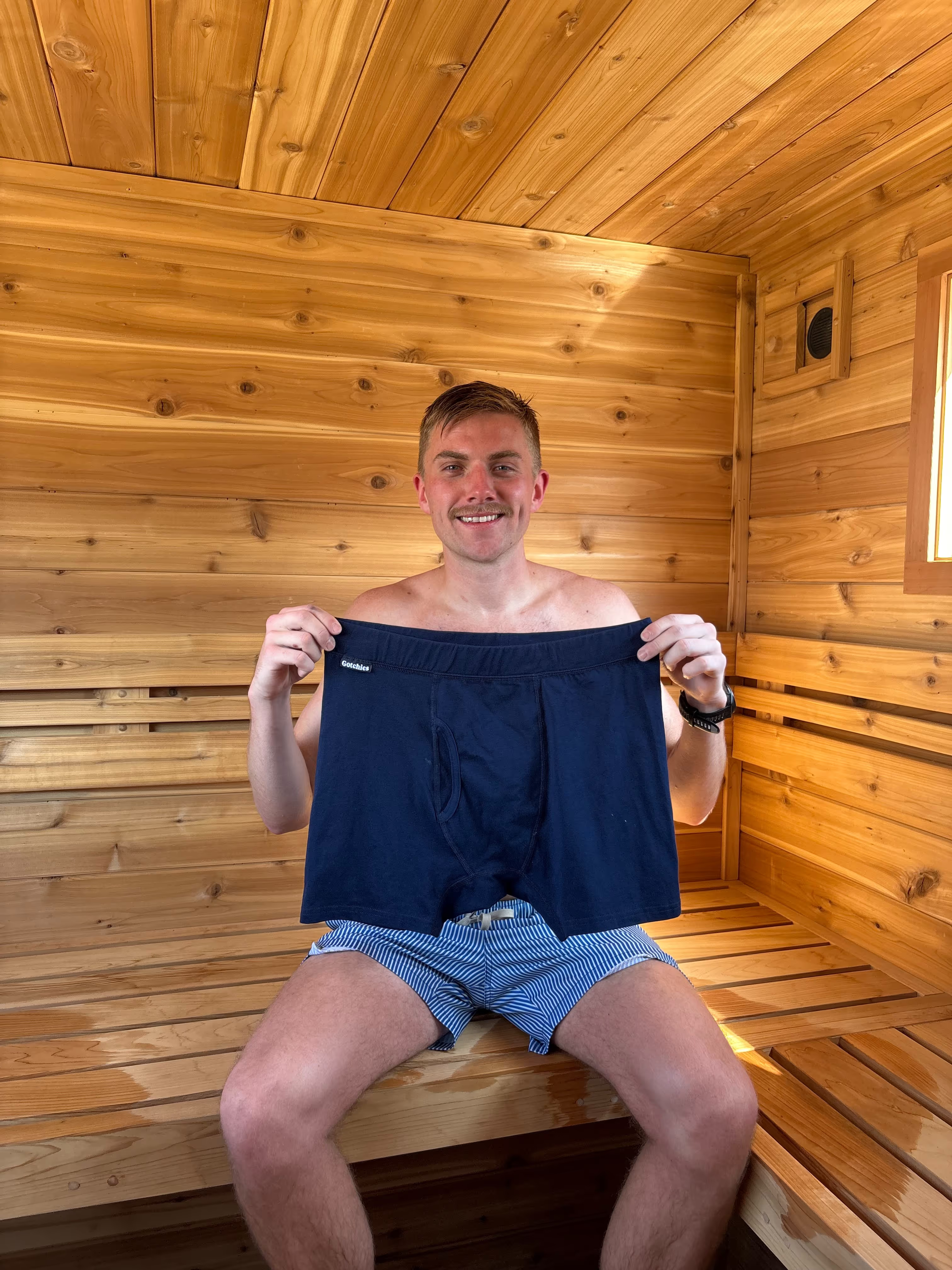
Organic Cotton Boxers 2.0 — Undyed
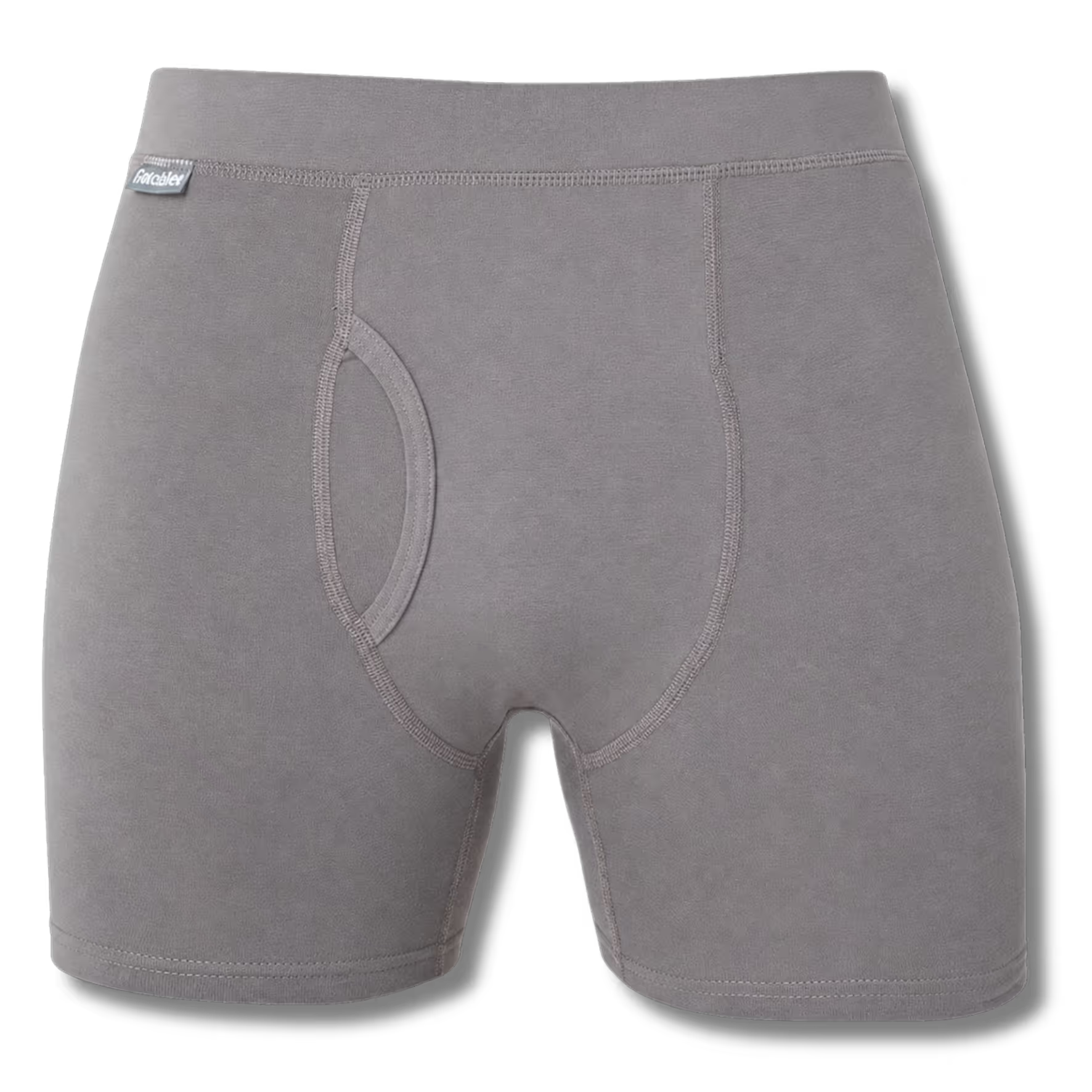
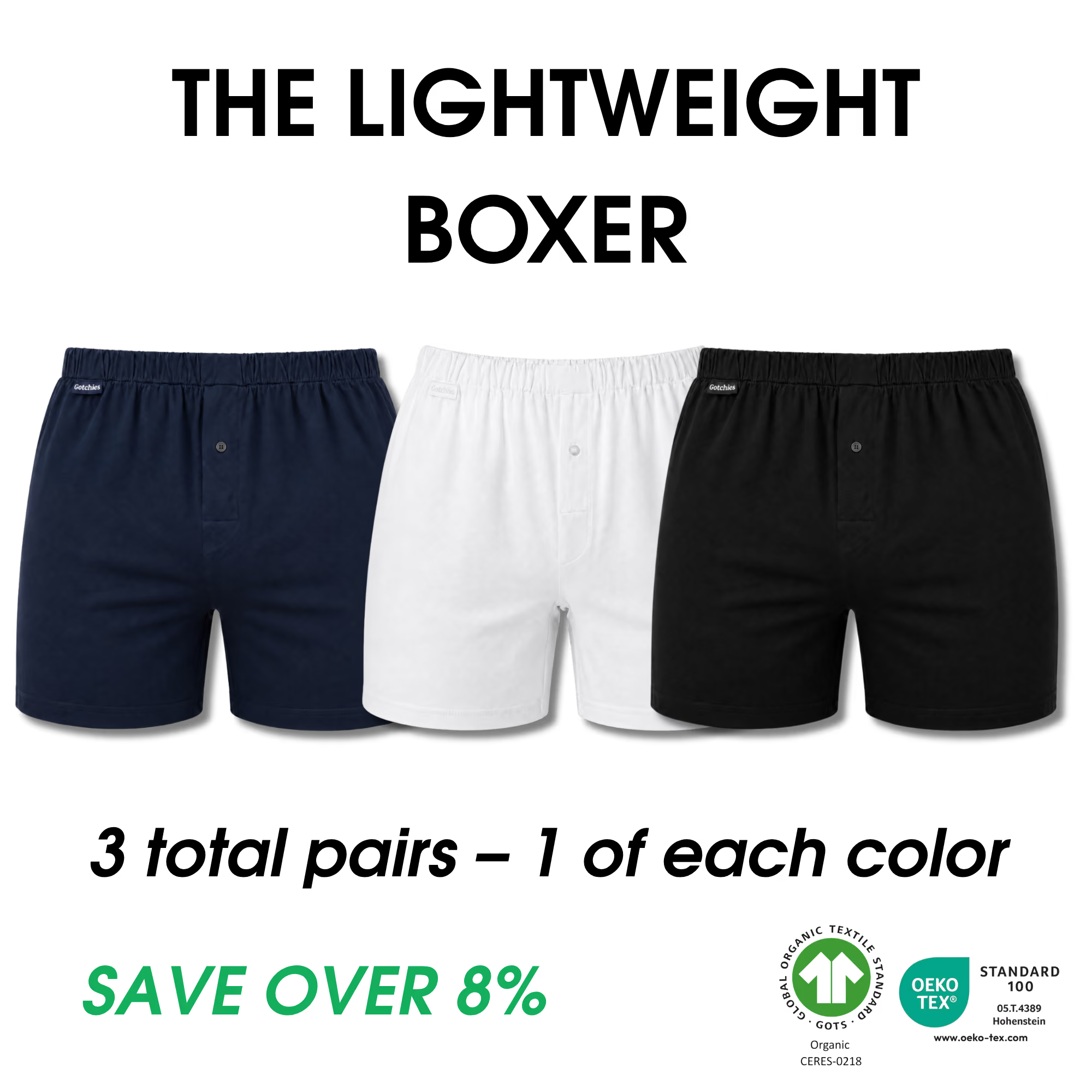
In the study, the groups that were fine wore one thing: natural fibre, all the way through. That's the whole design brief for the Boxers 2.0. 100% GOTS certified organic cotton — no polyester, no elastane, nothing petroleum-derived anywhere in the fabric. The undyed colourway goes one step further and skips the dye stage entirely. Cut loose with a 5.6" inseam so it breathes instead of clinging.
✓ 100% GOTS Certified Organic Cotton — the fabric that didn't move the needle in the study
✓ OEKO-TEX Standard 100 certified — certificate 05.T.4389, verify it yourself
✓ 5.6" inseam, built breathable and loose
✓ Organic-cotton-wrapped waistband — no plastic band against your skin
✓ Buttoned fly, no annoying tags, imported from Türkiye
✓ Undyed option available — no dye step at all
✓ Sizes S–XXL (28–46" waist). Between sizes on these? Size down.
Bundle & Save$32 → $25.60
Per pair, as you stack up
Single $32 · 2-Pack $30.40/pair (save 5%) · 4-Pack $28.80/pair (save 10%) · 8-Pack $25.60/pair (save 20%).
On Every OrderFree U.S. Shipping
On orders $100 and over
Plus 100-day hassle-free returns on eligible U.S. orders. Try one pair for fit, send the unworn pairs back.
Frequently Asked Questions
Where can I read the study myself?+Shafik A. “Effect of different types of textiles on male sexual activity.” Archives of Andrology, 1996 Sep-Oct;37(2):111–5. DOI 10.3109/01485019608988511, PMID 8886260. Search that PMID on PubMed and it comes straight up. We break it down alongside every other study we reference on the Education Hub.
Isn't a 50-man study too small to mean anything?+It's small — ten men per arm — and it's from a single research group that hasn't been widely replicated. We say that on the page above rather than burying it. What makes it worth your attention anyway is the internal consistency: more polyester was worse than less, twelve months was worse than six, the natural fibres didn't move, and removing the polyester reversed it. That's a coherent pattern, not a single odd data point.
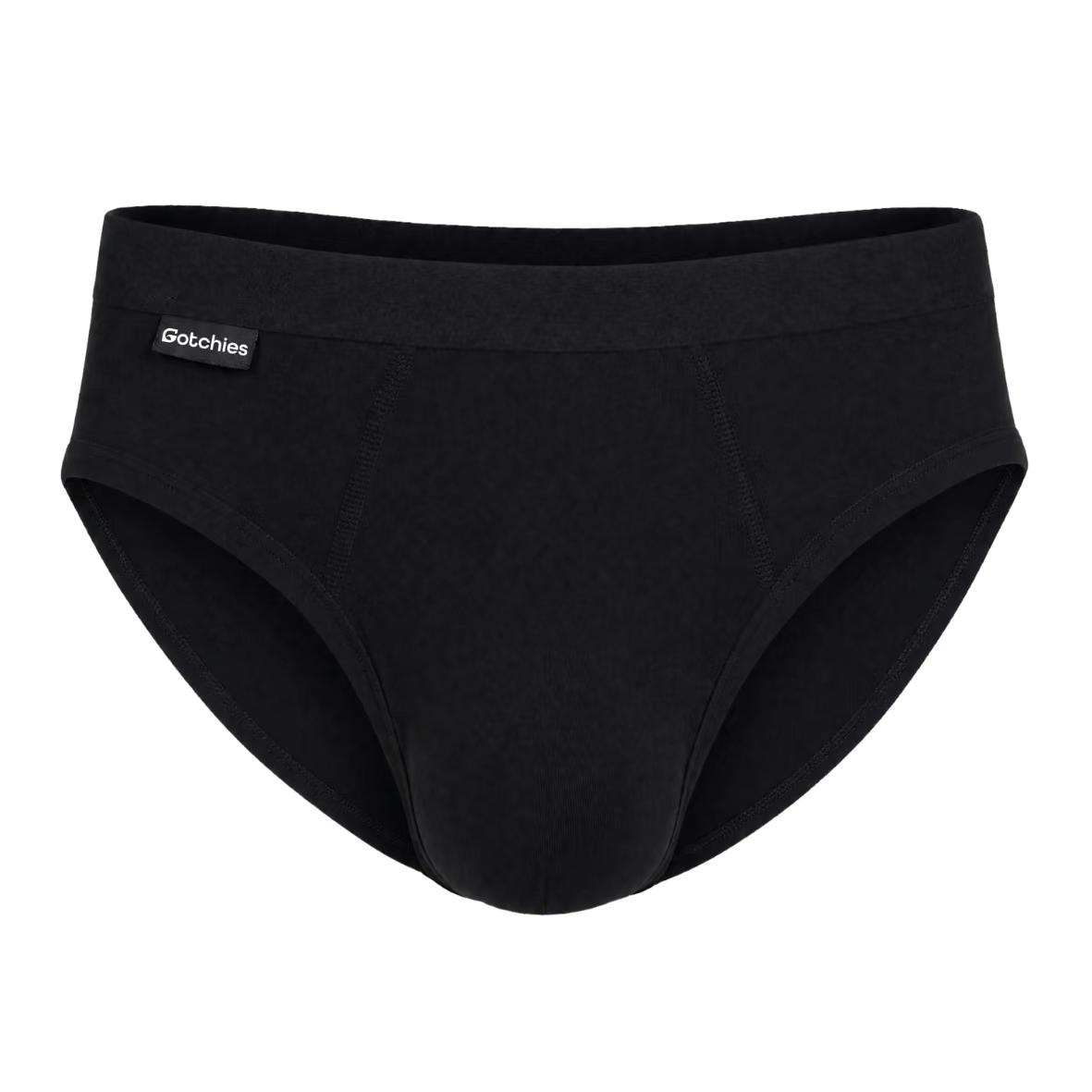
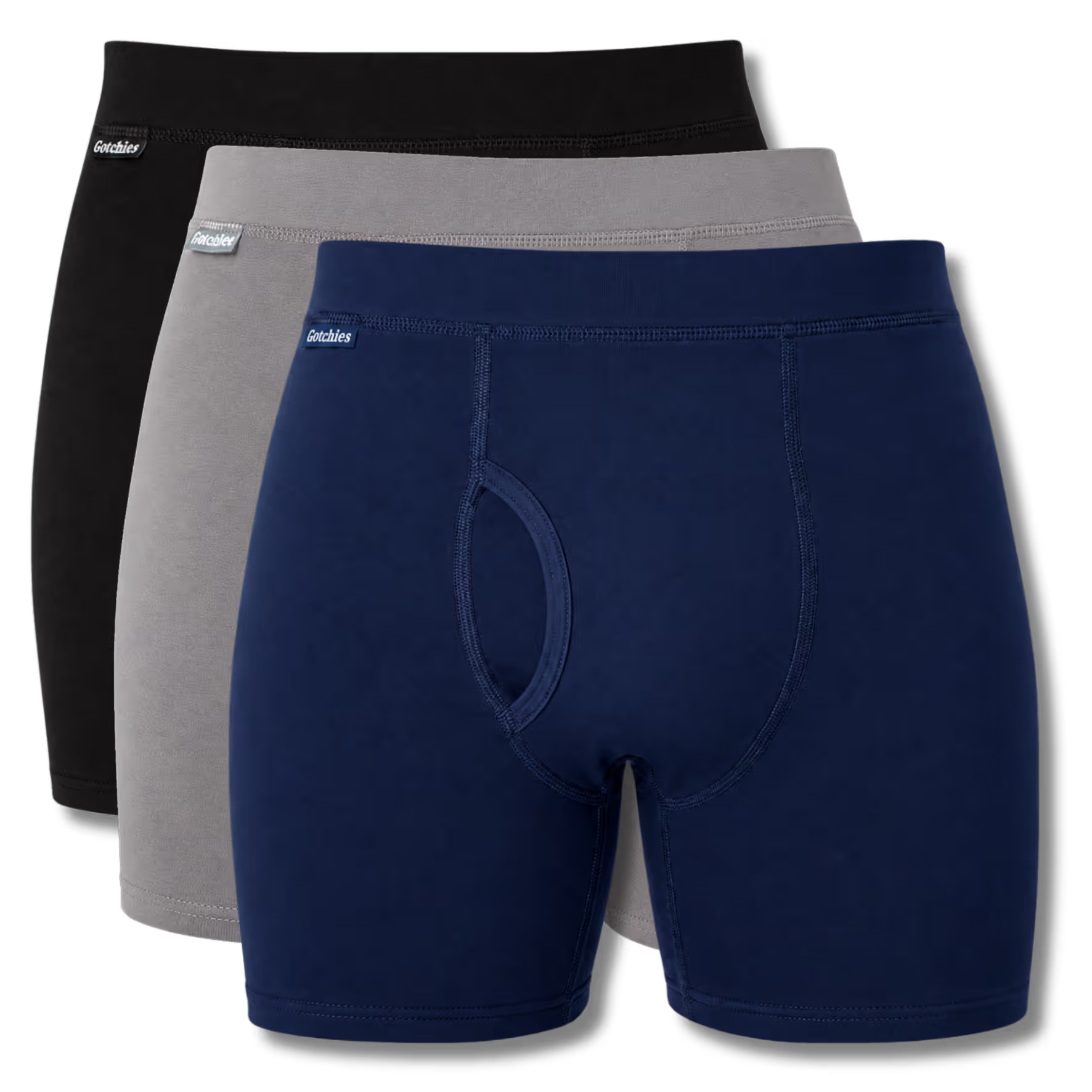
What's the difference between the Boxers 2.0 and your boxer briefs?+The Boxers 2.0 are 100% GOTS certified organic cotton — no elastane, no polyester, nothing synthetic in the fabric at all — cut loose with a 5.6" inseam. The boxer briefs use 95% organic cotton with 5% BPA-free elastane for a closer, more supportive fit. If your priority is getting synthetics off your skin entirely, the Boxers 2.0 are the purest option we make.
What does “undyed” mean?+Exactly what it says — the fabric skips the dye stage entirely, so it arrives the natural colour of the cotton. Our dyes are OEKO-TEX Standard 100 certified either way, but if you'd rather have one fewer process between the plant and your skin, undyed is the one.
How should I size the boxers?+S (28–30" waist), M (32–34"), L (36–38"), XL (40–42"), XXL (44–46"). These boxers were built to be breathable and loose, so stick with your usual size — and if you're between sizes on this cut specifically, size down. (That's the opposite of our boxer briefs, where we say size up.)
Is cotton actually better, or is wool the real winner here?+In this study they performed identically — both natural fibres showed insignificant change and neither generated any electrostatic potential. We make cotton because it's softer against that skin, easier to wash, more comfortable in heat, and can be GOTS certified end to end. The point of the study isn't “cotton wins,” it's “natural fibre didn't cause a problem and polyester did.”
What's the return policy?+100 days, initiated at getgotchies.loopreturns.com (U.S. orders). On multi-packs, try one pair for fit and return the unworn pairs. Opened one-packs are eligible for a size exchange but not a refund; unopened one-packs refund in full. Exchanges carry no handling fee (except single pairs at $5); refunds have an $8 fee. International orders are final sale.
Are these suitable for training?+Yes — elite marathoners, HYROX competitors and Navy pilots wear Gotchies. Cotton breathes and absorbs rather than wicking the way a synthetic does, which is the trade you're making on purpose. For a closer fit under heavy lifting or long runs, the boxer briefs are the better cut.
GOTS & OEKO-TEX Standard 100 Certified · Zero Polyester, Zero Elastane · 100-Day Returns On Eligible Orders · Free U.S. Shipping $100+ · 4.9/5.0 Average Rating
Source: Shafik A. Effect of different types of textiles on male sexual activity. Arch Androl. 1996 Sep-Oct;37(2):111–5. doi:10.3109/01485019608988511. PMID: 8886260. This article is provided for general education and is not medical advice.






.avif)
.avif)